
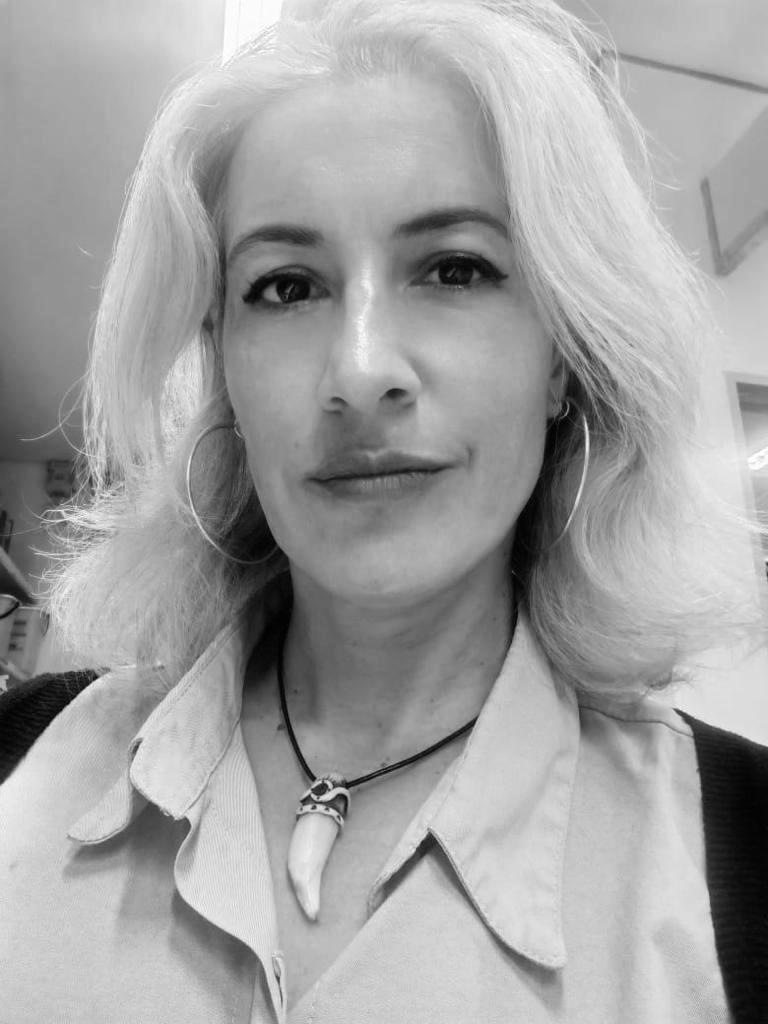
I met Camilla back in 2019 during my year as a pharmacist Intern. Camilla, a qualified phytotherapist and pharmacist assistant, held a pivotal role in the dispensary. However, I affectionately named her my “Fairy Godmother.” Our connection went beyond mere compatibility; it evolved into a profound friendship that enriched my knowledge base. Camilla assumed the role of a remarkable mentor, someone I hold in high regard for her expertise. Yet, what truly distinguishes her is her propensity to share knowledge generously, embodying the essence of an innate teacher.
This transformative encounter transpired within the realm of a pharmacy, where my initiation into herbal medicine came to light, leaving me utterly captivated. The pharmacy served as a magnet for patients seeking Camilla’s guidance, often referring to her as “Doctor Camilla.” During the quieter moments, I’d call her to explore the array of herbal medicines, tapping into her wisdom. As an intern, the flood of information can be overwhelming, but Camilla reassured me. She emphasised that my enthusiasm for learning would guide me through the maze of knowledge acquisition, urging me to absorb knowledge like a sponge.
Fast-forwarding several years, our bond remains unwavering, punctuated by spirited discussions. Conducting my first interview with Camilla proved to be a comfortable experience, her presence evoking a sense of ease. We share an unbridled passion for health, an enthusiasm palpable within the room. Enough about me – let’s delve into the crux of this narrative. In my quest to familiarise you with this expert, I posed a series of questions, revealing the depths of her journey. This dialogue is only us scratching the surface of alternative health and will persist, promising riveting insights for your perusal.
I commenced by inquiring about Camilla’s initiation into the medical field – when and why she ventured down this path.
Camilla: “I think it was quite by accident, I started around 1999 or 2000. I started with aromatherapy and reflexology, but then decided it wasn’t for me. I didn’t like massaging and things like that. But that got me interested in health or alternative health although I still wasn’t aware of the extent at the time. Around 2002 I got a job in a pharmacy to be a promoter for muscle science. For some reason I couldn’t stay out of the vitamin section and I spent all of my time promoting and selling vitamins. So much so that I was offered a job in the pharmacy by the pharmacist at Vitachem. Vitachem was different from your ordinary pharmacy as they had a huge homeopathic and herbal dispensary. And there was a naturopath in the dispensary.”
“Wait, what exactly is a naturopath?” I interjected.
Camilla: “Someone that practices naturopathy, they use hydrotherapy which is therapy with water and iridology. “
Brace yourself for this concept. There is a famous saying that the eyes are the windows of the soul. What if it is also the window to your health? The iris is the colourful part of the eye around the pupil. Imagine if someone could diagnose you just by looking in your eyes and at your iris. But more on iridology later.
Camilla: “So the same year that I started working in the pharmacy I started studying at UWC. Initially I started as a naturopath in a bachelor’s degree and later on in year 4 or 5 you could specialise in either Chinese Medicine, naturopathy, Unani Tibb which is an Arabic medicine and then phytotherapy. So naturopathy was my interest. That was where I started, I did a year of Naturopathy in year 4 but at the end of the year I started focusing on the herbs and the chemistry of herbal medicine. For the future that just seemed more solid at the time. So I switched my major to phytotherapy.”
Phytotherapy, often dubbed the “pharmacy of herbs,” revolves around deciphering the medicinal attributes of plants and herbs.
Elaborating on the subject, Camilla explained: “It is herbal medicine, focusing on their active constituents and the pharmacological action thereof.”
I have always wondered about the difference and I still wasn’t sure why a Phytotherapist isn’t the same as a Pharmacist. “From my understanding most medicine comes from plants, so what is the difference?” I asked.
Camilla explained: “95% of the medication that we dispense in the dispensary is originally from plants. So studying phytotherapy gave me the intelligence and ability to work in a pharmacy. When I qualified in 2008, I started working in the pharmacy full time while I started my private practice. But I loved working in the pharmacy. In my private practice I consulted patients and prescribed herbs. Gathering from my knowledge that I gained in the pharmacy I could recommend vitamins and supplements. My preference was definitely working in the pharmacy compared to private practice. Mostly because patients came to you, there was a steady stream of people coming to you for help.”
“And wouldn’t you agree that this is the optimal way to learn and acquire experience? After all, every patient who enters a pharmacy seeking advice essentially serves as a unique case study, don’t they?”
Camilla: “Exactly, that is why I felt that pharmacy was better for me. So rather than wondering where your next patient would come from or the eternal struggle with medical aids to recognise natural therapies or phytotherapy, I preferred working in the pharmacy.”
“And in the pharmacy setting, you were also exposed to market changes and product availability, weren’t you?”
Camilla: “Definitely, the Vitachem pharmacy had the biggest homeopathic and herbal dispensary in the Northern Suburbs. People traveled for hundreds of kilometers for our supply of homeopathic and herbal products.”
“So what is the difference between homeopathic medicine and phytotherapy?” – I asked.
Camilla: “Good question. Because many people know about homeopathy and lump all alternative medicine under the umbrella of homeopathy. But in homeopathy for example they utilise herbs, gems and minerals, and animal matter to create the remedies. However, in the end there is nothing of the original substance contained in the remedy. So it has been diluted to the point that there is no active component left in the product. For instance Apis Mel is made from crushed honeybees and when you take Apis Mel you are taking it for the symptoms that you would get from example a bee sting, symptoms like redness, swelling and burning. In homeopathy the more diluted it is, the stronger it is.”
If you were puzzled by all of that, you’re definitely not alone. Comparably, homeopathy can be thought of as the quantum mechanics of medicine. Quantum chemistry.
It’s important to mention that we don’t support using animal products in harmful or exploitative ways. However, Apis Mellifica is one of the go-to remedies in homeopathy. When we talk about homeopathy, we want to make sure you’re aware of all the available information.
Camilla continued: “Exactly that, you are going into the realm of quantum mechanics. So for anybody that does regular medicine and who understands the pharmacology of medicine it sounds like complete and utter nonsense. Which is why people have such a strong reaction against homeopathy. Because it either makes sense to you or it makes no sense to you. Where phytotherapy has the actual constituents in the product that has the pharmacological action.”
When I worked with Camilla, I observed her dispensing homeopathic medicine. Some are in the form of tiny white granules and others in liquids.
Camilla explained: “You get different forms of homeopathic remedies, some of them are in dilute alcohol tinctures, some of them are in globules or granules, some of them are crushed into powder, like teething powder. And these products are working on cellular memory. So these products are eliciting a response from your cellular memory. Now homeopathy is not my field of expertise, I only know what I have learned over the years of working in a homeopathic pharmacy. “
Homeopathy was founded on the stated principle that “like cures like,” from the Latin phrase “Similia Similibus Curantur”. Even though it may not make scientific sense, there exists an entire field dedicated to this study, encompassing vast quantities of products and numerous patients who not only believe in its efficacy but also favour it. I’m aware that Camilla possesses examples of homeopathy yielding impressive outcomes. Therefore, I inquired of her to provide us with an illustrative instance.
Camilla answered with excitement: “Oh definitely! With homeopathy, the factor that prevents it from working tends to be a person’s intellectual rationalisation of it. So I found in my experience that homeopathy has the best effect on children, animals and older people. But homeopathy is not for everybody.”
The mind wields remarkable power, a phenomenon frequently observed within the realm of pharmacy. This is particularly evident in the placebo effect, a phenomenon wherein a positive outcome arises that cannot be directly linked to the properties of the placebo substance. Instead, it stems from the patient’s unwavering belief in the treatment’s efficacy.
Interestingly, much like the placebo effect, a patient’s lack of alignment between their mindset and prescribed medication can hinder the potential positive impact.
Camilla: “My dog once got stung by a bee and her whole face literally swelled up like a ball. And I gave her Apis Mel, the crushed honeybees, and within minutes that swelling subsided to nothing. I did the same with my children, for the first years of their lives I used homeopathic or herbal remedies on them for 95% of the time. Children either get better or they don’t. My daughter had septic tonsillitis when she was about 18 months old and she had a febrile seizure. I gave her a homeopathic remedy that I got from the homeopath and within 24 hours it was as though she wasn’t sick. Literally going from being extremely sick to not being sick.”
A febrile seizure is a type of fit that a child can experience from a spike of fever usually due to infection.
In the end, what we’re driving at is this: even if it boils down to the placebo effect, does it truly matter? If it brings relief to a mother fretting over her ailing 18-month-old, the answer is a resounding no. Especially when there are no side effects, no harm inflicted on the body – that’s an undeniable victory. We continued with this conversation and will be discussing one of our favourite ancient medicinal herbs next. Come back next Friday for more.
Rynette Brandt
 The Medicine Healers